
- Arrest Records
- Judgments
- Bankruptcies
- DUIs & DWIs
- Felonies
- Warrants
- Jail Records
- Lien Records
- Sex Offenses
- Misdemeanors
- Criminal Records
- Federal Dockets
What are Utah Court Records?
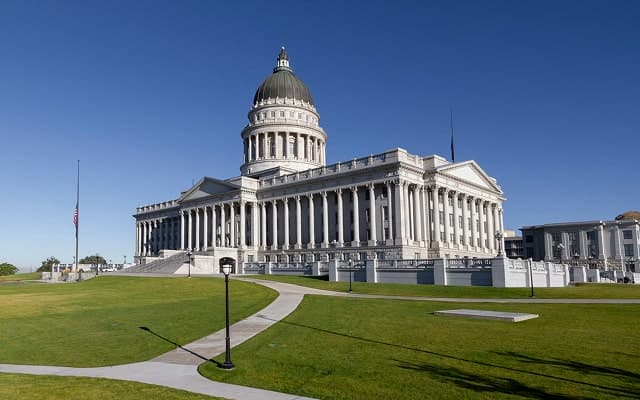
At over 3.5 million residents, Utah stands as the 30th most populous state in the US. Utah has a straightforward judicial system, consisting of a state supreme court, state court of appeals, and some local trial courts with limited or general jurisdiction, including district, juvenile, and justice courts. The state judicial system handles over 700,000 cases per year.
Utah court records are official records of the proceedings of a trial or hearing and are considered public records. These documents, which include indictments in criminal trials and complaints in civil proceedings, are generated and kept up to date by the courts. Among these records are:
Docket Sheets
These are official documents from a trial that include important details about parties, judges, and attorneys of record. They also provide a list and summary of the documents used during the trial, along with the date they were filed and the court record number assigned to each document.
Judgments and Orders
These documents include the verdicts rendered by the jury or judge. Following the trial, the judge signs the final ruling that specifies the penalties and obligations for each side.
Transcripts
Transcripts are written records of court proceedings; they record the decision of the judges. These documents are helpful when requesting an appeal or as supporting documentation for a motion.
Evidence
This includes physical and written evidence that is obtained from police investigations and introduced by both legal sides during debates.
Court Minutes
A record that shows the beginning and ending times of a trial. It provides the names of the attorneys, witnesses, and a concise synopsis of the court proceedings, including recesses, testimony, and official declarations.
Pleadings
These are formal, written statements that outline the demands made by each party to the court, including motions, plea deals, and complaints.
Briefs
These are written arguments presented to the court by legal counsel. These documents are meant to help the court resolve the legal issues involved in the case.
Most of these court documents are accessible to anyone who knows the details of the case, such as the names of the parties or the case numbers. However, certain records are exempt from public access, such as juvenile court records.
Types of Court Cases
The two main categories of court cases are criminal and civil. The primary distinctions between these case categories, despite their many similarities, are the potential penalties and the required levels of proof. Other categories of court cases include traffic and family cases.
Civil Cases
Civil proceedings resolve conflicts between people and businesses. An important and distinguishing aspect of civil cases is that they do not result in imprisonment or other severe loss of rights. Instead, civil cases are resolved by paying fines, stopping specific acts, or addressing the dispute's underlying cause. Their purpose is to settle disputes or provide the winner peace of mind.
Typically, a case starts when a person or organization (the "Plaintiff") alleges that another person or organization (the "Defendant") has caused them harm. By submitting a "complaint" and initiating a legal proceeding, the plaintiff requests redress from the court. To make up for their losses or injuries, the plaintiff may request "damages" or monetary compensation. They may also seek an injunction, which prevents the defendant from doing something.
A judge or jury trial may be used to decide the case. The parties may also decide to settle the case among themselves, which typically means financial agreements. These could help avoid trial costs. In civil action, there is no legal right to counsel. Civil parties are required to either attend in court pro se (representing themselves) or engage their own counsel.
The level of proof that civil attorneys must fulfill is known as the "preponderance of evidence." This means that the evidence offered by the winning side was more likely to be true than not. Decisions are not influenced by the amount of evidence presented; decisions are based upon the persuasiveness of the evidence that is presented.. Unanimity is not necessary for a civil judgment.
Criminal Cases
A criminal case is created when a government prosecutor accuses someone of committing a crime. Criminal cases deter future criminal activity and remove or rehabilitate lawbreakers from society. Criminal cases often start after the defendant is taken into custody and charged, typically during an indictment hearing.
Defendants in criminal cases are entitled to a trial by a jury of their peers. To eliminate bias, the judge interviews each juror after hand-picking them from a randomly selected pool of district residents. Defendants may choose a jury-free bench trial. Unlike civil cases, defendants also have a right to representation by legal counsel.
Criminal juries are required to vote unanimously, in contrast to civil matters. This high standard is because of the far more severe penalties that could be imposed in a criminal prosecution. When a court finds someone guilty of a crime, they may be sentenced under criminal law, which can include community service, incarceration, a fine, or a combination of the three.
What Are the Different Courts in Utah?
Utah's judiciary is a unified, state-run system with two appellate courts and four trial court levels, administered by the Utah Judicial Council, with state judicial administration funded at an estimated $160 million a year. Justice courts are staffed and funded by cities and counties but remain part of the state judicial branch.
| Court Level | Court Name | Jurisdiction | Key Functions |
|---|---|---|---|
| Appellate | Supreme Court | Statewide; five justices | Hears appeals from the trial courts and the Court of Appeals, and sets rules for the courts and the bar. |
| Appellate | Court of Appeals | Statewide; seven judges | Reviews appeals of district and juvenile court decisions, including most criminal and civil appeals. |
| General Jurisdiction | District Courts | Felonies, civil, domestic, probate, and property cases in eight judicial districts | Conduct trials, handle family and probate matters, and review search warrants and appeals from justice courts. |
| General Jurisdiction | Business and Chancery Court | Statewide business disputes over $300,000 in 21 defined categories | Resolves complex commercial and equity cases in a single specialized court. |
| Limited Jurisdiction | Juvenile Courts | Delinquency and child welfare cases for minors | Decide juvenile offenses, abuse and neglect, adoption, and termination of parental rights cases. |
| Limited Jurisdiction | Justice Courts (105 city and county courts) | Class B and C misdemeanors, infractions, and small claims up to $20,000 | Resolve traffic, minor criminal, and small claims cases close to where they arise. |
How Many Federal Courts Are In Utah?
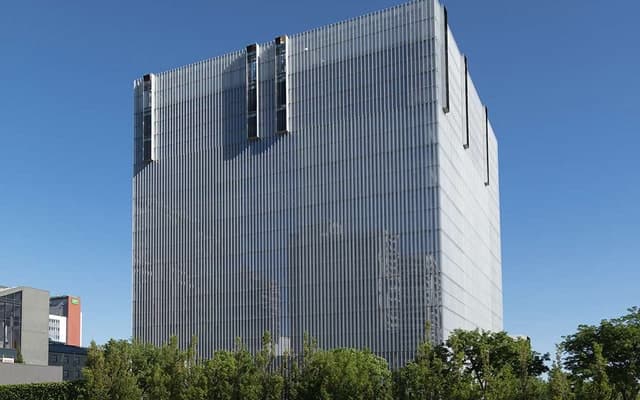
The US District Court for the District of Utah is located in Utah. The court has its headquarters in Ogden and Salt Lake City and has several district and magistrate judges, headed by the chief judge.
The president of the United States nominates, and the US Senate confirms judges who serve on the federal district courts. These judges are appointed for life sentences. Barack Obama appointed the current chief judge in 2012. Both Republican and Democratic presidents nominated other judges.
Utah has a single federal bankruptcy court. The U.S. Court of Appeals for the 10th Circuit receives many appeals of decisions rendered in these courts.
How Many Court Cases Are Filed Each Year in Utah?
Utah courts received an estimated 702,600 new cases in FY2025, including 265,351 district court filings, with traffic and criminal cases making up most of the volume. Justice court clearance rates average roughly 97% to 101%, and district courts are clearing slightly fewer cases than they receive.
| Case Type | Annual Filings | % of Total | Common Offense/Subtype | Clearance Rate |
|---|---|---|---|---|
| Traffic | ~300,000 | ~42.7% | Traffic infractions and moving violations, mostly in justice courts | ~101% |
| Criminal | ~140,000 | ~19.9% | Felonies, Class A misdemeanors, and Class B and C misdemeanors such as DUI | ~99% |
| Civil | ~110,000 | ~15.7% | Debt collection, evictions, contract, and injury or property claims | ~98% |
| Small Claims | ~40,000 | ~5.7% | Claims up to $20,000 in justice courts and district courts | ~97% |
| Domestic Relations | ~25,000 | ~3.6% | Divorce, custody, child support, and protective orders | ~98% |
| Juvenile | 17,618 | 2.5% | Delinquency referrals (14,181) and child welfare matters (3,437) | ~100% |
| Other | ~70,000 | ~10.0% | Probate, search warrants, expungements, and other filings | ~100% |
| Total | ~702,618 | 100% | — | ~99% |
How Do I Look Up Court Cases in Utah?

If you are seeking court records in Utah, there are many options available to you. The simplest and most effective way to view court records is to use the public access terminal. You can search and view cases using the case number or party names on the self-help public terminals that are provided by the majority of district courts. For the appellate court, you may use the appellate docket search portal to find dockets. You will need to provide the docket number. The exact process of looking up Utah court records depends on the specific court the record you are seeking is from.
You may also use the Utah Open Records Portal to submit public records requests to various government entities in Utah. You may also request the records via mail. Such requests must be written and should include the case number, first name, last name, date of birth of one of the parties to the case, the specific document needed, a self-addressed stamped envelope, and a phone number to the court where the case was filed.
Number of Active Judges — State & Federal
Utah's state courts are staffed by justices and judges across the appellate, district, juvenile, justice, and business courts, alongside five active federal district judges.
| Court | Jurisdiction | Active Judges | Selection Method |
|---|---|---|---|
| Supreme Court | Statewide appellate | 5 | Governor appoints from nominating commission list, Senate confirms; retention elections every 10 years |
| Court of Appeals | Statewide appellate | 7 | Governor appoints from nominating commission list, Senate confirms; retention elections every 6 years |
| District Courts | General jurisdiction trial courts | 78 | Governor appoints from nominating commission list, Senate confirms; retention elections every 6 years |
| Business and Chancery Court | Statewide complex business disputes | 1 | Governor appoints from nominating commission list, Senate confirms; retention elections every 6 years |
| Juvenile Courts | Juvenile delinquency and child welfare | 33 | Governor appoints from nominating commission list, Senate confirms; retention elections every 6 years |
| Justice Courts | Misdemeanors, infractions, and small claims | 70 | Appointed by the city or county that operates the court; unopposed retention elections every 6 years |
| U.S. District Court, District of Utah | Federal trial court | 5 | Nominated by the President and confirmed by the U.S. Senate |
| Total Active Judges | — | 199 | — |
What Court Records Are Not Available to the Public in Utah?
While many court records are available to the public upon request, some are protected. Court security plans, materials covered by attorney-client privilege, an attorney's work product, and certain private company documents are some records that may be protected. Public access to juvenile court case records is also notably restricted.
Additionally, some information in a public court record is restricted from public access. These include:
- The Social Security number
- Driver's license number
- Bank account numbers and details
- Name and birthdate of a child (with the exception of when the child's name appears on a civil stalking injunction or protective order, which are public papers)
- A non-party's address, phone number, and email
You may file a motion to classify a record as private (or protected) if the information in a document is so prevalent that it cannot readily be suppressed, or if filing the non-public information is the principal purpose of the document. This is not the same as requesting the court to "seal" the record. While a sealed record is physically sealed and cannot be viewed or copied by anyone, not even a party, without a court order, private and protected records are kept safe from public view. In Utah, sealed records are rare.
Average Case Processing Time & Clearance Rates
Processing time in Utah depends on the type of case: infractions and small claims are resolved in weeks to a few months in justice courts, while civil, domestic, and felony cases in district court take much longer. The figures below are statewide estimates.
| Case Type | Court Level | Average Processing Time | Description | Clearance Rate |
|---|---|---|---|---|
| Traffic & Parking | Limited Jurisdiction | ~30–60 days | Most citations are resolved by paying a fine or by plea in justice court; contested cases are set for a bench trial. | ~101% |
| Small Claims | Limited Jurisdiction | ~2–3 months | Justice and district courts decide claims up to $20,000, usually in a single hearing after service. | ~97% |
| Misdemeanor Criminal | Limited Jurisdiction | ~3–6 months | Begin with an initial appearance in justice court and resolve through plea, diversion, or trial. | ~97% |
| Civil Cases | General Jurisdiction | ~9–15 months | Move through pleadings, discovery, and motions in district court; most are resolved by settlement or default judgment. | ~98% |
| Domestic Relations | General Jurisdiction | ~6–12 months | Divorces carry a 90-day waiting period; uncontested cases finish by stipulation while contested cases need hearings or trial. | ~98% |
| Felony Criminal | General Jurisdiction | ~6–9 months | Proceed through preliminary hearing, arraignment, plea negotiations, and trial or sentencing in district court. | ~100% |